
Parenting a teenager comes with plenty of questions, especially when their behavior starts to change. While adolescence naturally brings emotional, physical, and social changes, it can be difficult to tell the difference between typical growing pains and red flags in teenage behavior that may need closer attention.
Mood swings, a desire for independence, and changing friendships are all common during the teen years. However, persistent changes in mood, behavior, relationships, or daily functioning may signal that your teen is struggling with something more than the usual challenges of growing up. Recognizing these warning signs early can make it easier to provide the right support before problems become more serious.
In this guide, we’ll cover 7 red flags in teenage behavior parents shouldn’t ignore and explain when it may be helpful to seek professional guidance.
Normal Teenage Behavior vs. Warning Signs
The teenage years are filled with change. As adolescents grow and develop, it’s normal to see shifts in their emotions, interests, and behavior. As kids grow older, they will experience physical changes and mood swings. Many will also start to want more independence, become more emotionally sensitive, or have occasional disagreements with family. They may also outgrow old hobbies, form new friendships, or explore different interests as they discover who they are.
While these changes are a natural part of adolescence, some behaviors deserve closer attention. When emotional or behavioral changes become persistent, unusually intense, or interfere with your teen’s relationships, school performance, or daily life, they may be signs of a deeper concern rather than typical teenage development.
Understanding the difference can help you respond with empathy instead of assumptions.
7 Red Flags in Teenage Behavior Parents Shouldn’t Ignore
Not every behavioral change is a warning sign. However, when changes bring negative consequences, or become more severe over time, they deserve your attention. The following red flags don’t automatically mean something is wrong, but they can indicate that your teen may need additional support.
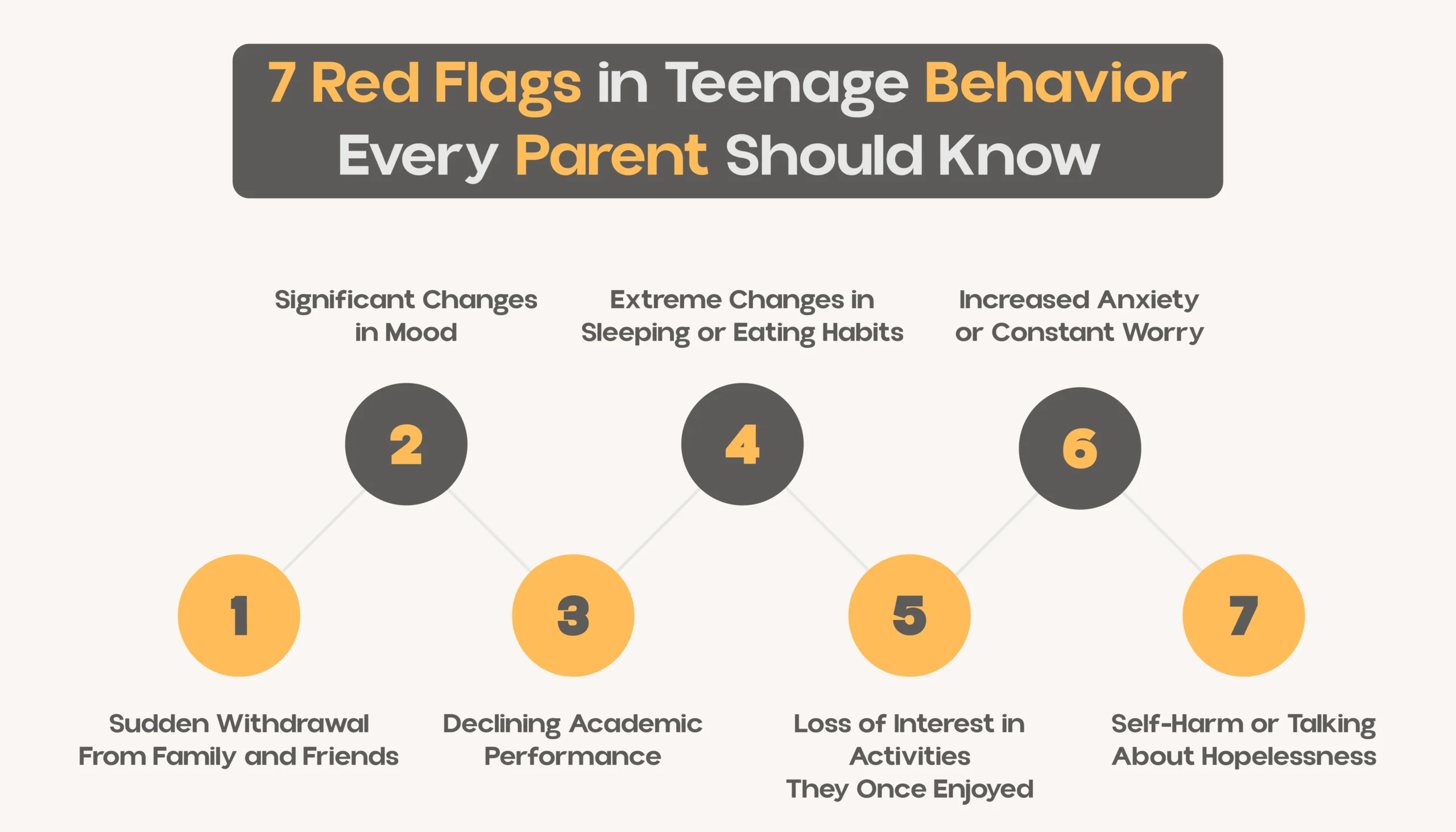
1. Sudden Withdrawal From Family and Friends
It’s normal for teenagers to want more privacy or spend extra time with friends. However, consistently avoiding family, isolating themselves in their room, or pulling away from close friends for several weeks may be a sign that something deeper is going on.
Social withdrawal can sometimes be linked to anxiety, depression, bullying, low self-esteem, or other emotional challenges. If your teen no longer enjoys spending time with people they once felt close to or seems disconnected from everyday life, it’s worth having an open, supportive conversation. If the behavior continues or worsens, seeking guidance from a mental health professional can help uncover what’s driving the change.
2. Significant Changes in Mood
Teenagers naturally experience emotional ups and downs as they navigate adolescence. However, ongoing sadness, hopelessness, extreme irritability, frequent anger, or mood changes that last for weeks are not typical growing pains.
Persistent mood changes may be associated with depression, anxiety, chronic stress, or other mental health concerns. If these emotions begin affecting your teen’s relationships, motivation, or ability to function at school or home, it’s important to take them seriously rather than assuming they’ll pass on their own.
Concerned About Your Teen’s Emotional Well-Being?
If your teen’s mood changes are becoming more frequent or beginning to affect school, relationships, or daily life, professional support can make a meaningful difference. Ignite Counseling Colorado offers Teen Counseling with therapists who help teens manage anxiety, depression, stress, and other emotional challenges in a supportive, judgment-free environment.
3. Declining Academic Performance
A poor grade on one test isn’t usually a cause for concern. However, a noticeable drop in grades, missing assignments, frequent absences, or a sudden lack of motivation toward school may signal an underlying issue.
Academic struggles can stem from emotional distress, anxiety, learning difficulties, bullying, or problems at home. Looking beyond the report card and understanding what may be contributing to these changes can help your teen receive the support they need.
4. Extreme Changes in Sleeping or Eating Habits
Sleep and appetite naturally fluctuate from time to time, especially during adolescence. However, sleeping far more or less than usual, experiencing ongoing insomnia, significant weight changes, or a noticeable loss of appetite may indicate that your teen is struggling emotionally or physically.
These changes can sometimes be linked to anxiety, chronic stress, or other health concerns. If they persist or begin affecting your teen’s overall well-being, it’s a good idea to consult both a healthcare provider and, when appropriate, a mental health professional.
5. Loss of Interest in Activities They Once Enjoyed
It is normal for teens to discover new hobbies and outgrow old ones. But suddenly giving up sports, creative activities, or spending time with friends without replacing them with new interests may be a cause for concern.
Losing interest in activities that once brought joy can be a sign of depression, emotional exhaustion, or other mental health challenges. If your teen seems disengaged from the things that once excited them, it’s worth exploring what may be behind the change.
6. Increased Anxiety or Constant Worry
It’s natural for teenagers to feel nervous before a big test, a sporting event, or an important life change. However, excessive worry that doesn’t go away or begins interfering with everyday life may be a sign of an anxiety disorder or another mental health concern.
Your teen may constantly seek reassurance, avoid school or social situations, complain of feeling overwhelmed, or experience panic attacks. Some teens also report frequent headaches or stomachaches that don’t have a clear medical cause. If anxiety is preventing your teen from enjoying daily activities or reaching their potential, professional support like our Youth and Family Therapy Center in Westminster can help them develop healthy coping skills.
7. Self-Harm or Talking About Hopelessness
Any mention of self-harm, feeling hopeless, or believing that life isn’t worth living should always be taken seriously. While not every teen who expresses these feelings intends to act on them, they are important signs that your child may be experiencing significant emotional distress.
If your teen talks about hurting themselves, gives away personal belongings, withdraws completely from others, or expresses feelings of hopelessness, respond with compassion rather than judgment. Let them know you’re there to listen, and seek immediate support from a qualified mental health professional or emergency services if you believe they are in immediate danger. Early intervention can provide the care and support your teen needs during a difficult time.
DBT Therapy Can Help Teens Build Healthier Coping Skills
For teens struggling with self-harm, overwhelming emotions, or body image concerns, Dialectical Behavior Therapy (DBT) provides practical tools for managing distress, improving emotional regulation, and developing healthier coping strategies. Ignite Counseling Colorado offers evidence-based DBT to help teens navigate life’s challenges with greater confidence.
What Causes These Behavioral Changes
There isn’t always a single reason behind concerning changes in a teenager’s behavior. In many cases, several factors can contribute at the same time, making it difficult to identify the root cause without a thorough assessment.
Some teens may be struggling with mental health conditions such as anxiety, depression, OCD, trauma, or ADHD. Others may be coping with bullying, social isolation, academic pressure, or family conflict. They may also be dealing with social media influences, questions about body image, identity development, or major life transitions like a move, divorce, or the loss of a loved one. These experiences can affect how teens think, feel, and respond to the world around them.
While understanding the possible causes is helpful, it’s important to avoid jumping to conclusions or trying to diagnose your teen on your own. A qualified mental health professional can evaluate your teen’s symptoms, identify any underlying concerns, and recommend the most appropriate support based on their unique needs.
Specialized Youth and Family Counseling for Teens
If you’ve noticed several of these red flags in your teenager, professional support can make a meaningful difference. Learn more about our Youth and Teen Counseling services in Westminster and how our therapists help adolescents navigate emotional and behavioral challenges.
When Should Parents Seek Professional Help?
Watching your teenager struggle can leave you wondering whether what you’re seeing is a normal part of growing up or a sign that they need extra help. While every teen has difficult days, it’s important to pay attention when behaviors don’t improve with time or start affecting different areas of their life.
If you’ve noticed these warning signs for several weeks, it may be time to speak with a therapist. Your teen may be pulling away from family and friends, their grades may continue to decline, or everyday tasks may feel increasingly difficult for them. The same is true if conversations regularly end in conflict, your child refuses to communicate, or you’re concerned about their safety or emotional well-being.
Seeking counseling isn’t about labeling your teen or questioning your parenting. It’s about giving them a safe space to understand what they’re experiencing, learn healthy coping skills, and build the confidence to navigate life’s challenges. The earlier concerns are addressed, the easier it can be to help your teen get back on a healthier path.