Have you ever wondered why criticism feels overwhelming, trusting others is difficult, or certain situations trigger emotions you cannot quite explain? Sometimes, these patterns connect to difficult childhood experiences that still affect how you feel and respond as an adult.
Childhood experiences can shape how people understand themselves, manage emotions, and build relationships. When those experiences are painful or overwhelming, their effects may continue into adulthood, even when the connection is not immediately clear.
In this blog post, we’ll explore eight possible signs of repressed childhood trauma in adults, how they may affect daily life, and when professional support can help.
Recognizing these patterns can be a first step toward understanding yourself. However, emotional difficulties or gaps in childhood memories do not necessarily mean trauma has been repressed.
What Is Repressed Childhood Trauma?
Repressed childhood trauma refers to the idea that distressing experiences may become inaccessible to conscious awareness. Childhood trauma can involve abuse, neglect, exposure to violence, or growing up in an environment where a child feels unsafe or emotionally unsupported.
Some adults remember difficult childhood experiences but struggle with their emotional effects. Others have gaps in their childhood memories. However, difficulty remembering the past does not automatically mean trauma has been repressed. Memory gaps can occur for many reasons, including normal forgetting as we grow up.
Repression and suppression are also different. Repression traditionally refers to an unconscious process, while suppression involves consciously setting thoughts or memories aside.
Understanding how childhood experiences may affect adult life can help people recognize emotional and behavioral patterns without jumping to conclusions about their past.
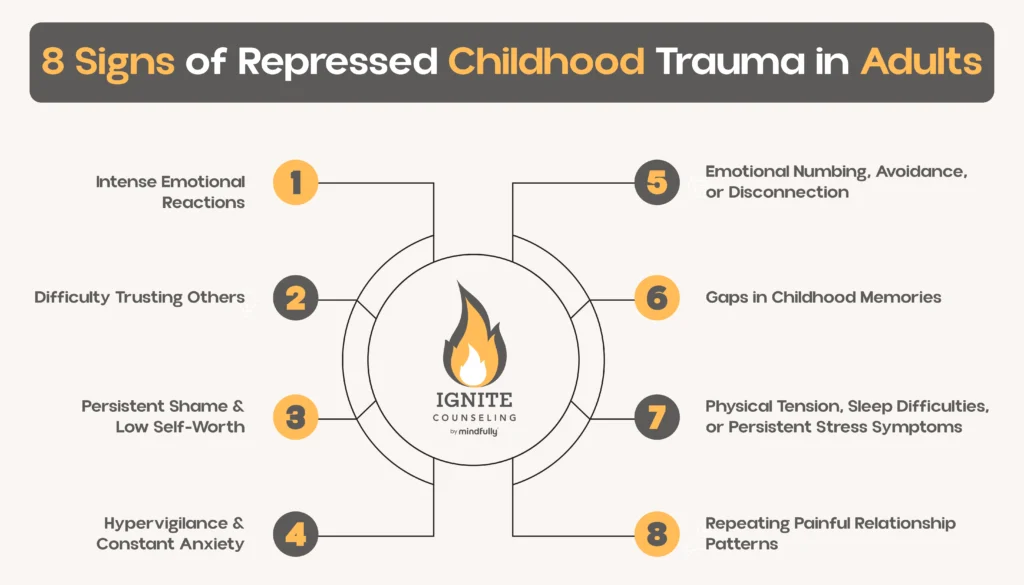
8 Signs of Repressed Childhood Trauma in Adults
Childhood experiences can influence how adults manage emotions, build relationships, and respond to stress. However, these signs can have several causes and do not necessarily indicate repressed trauma. Understanding them can help you recognize patterns that may be worth exploring.
1. Intense Emotional Reactions
You may experience strong emotional reactions to situations that seem minor to others. Criticism, conflict, rejection, or feeling ignored might trigger overwhelming sadness, anger, fear, or shame.
For example, if your manager offers a small suggestion about your work, you might immediately feel embarrassed or believe you have disappointed everyone. The reaction may feel much bigger than the feedback itself, leaving you anxious long after the conversation ends.
Sometimes, these reactions connect to earlier experiences in which criticism felt threatening or made you feel inadequate. However, intense emotions can develop for many reasons and do not automatically indicate childhood trauma. Noticing recurring triggers can help you better understand your responses.
2. Difficulty Trusting Others
If you experienced inconsistent care, rejection, or unsafe relationships during childhood, trusting others may feel difficult in adulthood. You might worry that people will abandon you, take advantage of your vulnerability, or use personal information against you.
For example, a friend may offer to help you during a difficult time, but you may question their intentions. Instead of accepting their support, you feel uncomfortable relying on them because you worry they might let you down later.
These patterns can make relationships feel exhausting, even when others are trying to support you. Past experiences may shape how safe you feel with others, but trust difficulties can stem from many causes. Recognizing these patterns can help you understand your reactions and build healthier relationships over time.
3. Persistent Shame and Low Self-Worth
Some adults struggle with persistent feelings of inadequacy or believe they are somehow less deserving of love, respect, or support. These beliefs may develop when a child experiences frequent criticism, neglect, rejection, or pressure to meet unrealistic expectations.
You might receive praise for completing a project at work but immediately focus on one small mistake. Instead of feeling proud of what you accomplished, you tell yourself that you are not good enough and that others will eventually realize it.
When these beliefs become deeply ingrained, it can be difficult to recognize your strengths or accept positive feedback. Childhood experiences may contribute to low self-worth, but other factors can cause these feelings, too. Understanding where these beliefs come from can help you develop a more compassionate view of yourself.
4. Hypervigilance and Constant Anxiety
Some adults feel constantly alert to possible threats, even in situations that appear safe. They may pay close attention to other people’s moods, watch for signs of conflict, or struggle to relax because they expect something to go wrong. These responses can sometimes develop after growing up in an unpredictable or frightening environment.
You might notice a slight change in someone’s tone of voice and immediately wonder whether you have upset them. Even when the conversation moves on, you may keep replaying it in your mind, trying to figure out what went wrong.
Living in this state of alertness can make everyday interactions exhausting and interfere with sleep, concentration, and relationships. Although past adversity can contribute to hypervigilance, anxiety and heightened alertness can have other causes as well.
5. Emotional Numbing, Avoidance, or Disconnection
Some adults struggle to recognize, express, or connect with their emotions. You might feel detached during emotionally significant moments, avoid conversations about painful experiences, or keep yourself constantly busy to avoid uncomfortable feelings. These patterns can develop as ways to cope with overwhelming experiences.
Imagine a close friend asks how you are feeling after a difficult disagreement. Instead of talking about what upset you, you feel nothing at all or struggle to find the words. You might change the subject, withdraw from the conversation, or act as though nothing happened, even when the situation still bothers you.
Although emotional detachment and avoidance can occur after difficult childhood experiences, they can also be associated with stress, anxiety, depression, and other factors. Recognizing these patterns can help you understand your emotional needs and consider healthier ways to respond.
6. Gaps in Childhood Memories
Some adults remember very little about certain periods of their childhood. You might recall specific events clearly but struggle to remember everyday experiences, family interactions, or what life was like during a particular stage of growing up.
However, childhood memory gaps do not necessarily mean that trauma has been repressed. Early memories naturally fade over time, and stress, attention, and normal differences in memory can affect what people recall.
If you notice gaps in your childhood memories, you don’t need to force yourself to remember what happened or assume something traumatic occurred. If these gaps cause distress or raise questions about your past, a qualified mental health professional can help you explore your concerns at a comfortable pace without making assumptions about your experiences.
7. Physical Tension, Sleep Difficulties, or Persistent Stress Symptoms
Emotional distress can sometimes show up physically. You may experience muscle tension, frequent headaches, difficulty sleeping, or feel exhausted even after enough rest. For some people, ongoing stress can make it difficult for the body to relax, particularly when they feel unsafe or overwhelmed.
You might lie awake at night replaying conversations or worrying about what could go wrong the next day. Even when nothing urgent is happening, your body may feel tense, making it difficult to settle down and get restful sleep.
These physical symptoms can have many causes, including medical conditions, anxiety, and everyday stress. They do not automatically indicate childhood trauma. If symptoms persist or interfere with daily life, consider speaking with a healthcare professional to understand what may be contributing to them.
8. Repeating Painful Relationship Patterns
Early relationships can influence how people approach closeness, conflict, and emotional safety as adults. If you grew up with unpredictable behavior, frequent criticism, or emotional neglect, you may repeat familiar relationship patterns, even when they leave you feeling hurt or unsupported.
You might continue investing in relationships where your needs are overlooked because setting boundaries feels uncomfortable or you worry that speaking up will push the other person away. Even when you recognize that a relationship is unhealthy, changing the pattern may feel difficult.
These patterns do not mean you are destined to repeat your past. Relationship difficulties can develop for many reasons, but recognizing recurring behaviors can help you understand your needs, establish healthier boundaries, and build more supportive connections.
Why Can Childhood Trauma Affect Adults Later in Life?
Childhood is an important period for developing emotional regulation, trust, and a sense of safety. When a child experiences ongoing fear, neglect, or unpredictable caregiving, they may develop ways of responding that help them cope at the time but become difficult to manage later in life.
Research from the Centers for Disease Control and Prevention (CDC) found that 63.9% of U.S. adults reported at least one adverse childhood experience (ACE), while 17.3% reported four or more types. These experiences can include abuse, neglect, or household challenges during childhood. These figures highlight how common childhood adversity is, although they do not tell us how many adults have repressed memories.
For instance, staying alert to a caregiver’s mood may help a child avoid conflict in an unpredictable home. As an adult, that same response may lead to constant worry about upsetting others or difficulty relaxing in safe environments.
What to Do If You Recognize These Signs
Recognizing these patterns can help you better understand your emotions, reactions, and relationships. However, you do not need to label your experiences as childhood trauma to take your feelings seriously or seek support.
Here are a few ways to begin:
- Notice your triggers: Pay attention to situations that leave you feeling anxious, ashamed, rejected, or overwhelmed. Recognizing recurring patterns can help you understand how you respond emotionally.
- Practice self-compassion: Approach difficult feelings with curiosity rather than criticism. You do not need to blame yourself for the ways you have learned to cope.
- Build healthier boundaries: Practice communicating your needs and identifying relationships in which you feel respected and supported.
- Consider professional support: If these patterns affect your relationships, emotional well-being, or daily life, a mental health professional can help you explore them.
At Ignite Counseling Colorado, you can find a supportive space to explore difficult emotions and experiences at a manageable pace. Therapy may help you recognize triggers, strengthen emotional regulation skills, establish healthier boundaries, and work through the effects of distressing experiences without making assumptions about memories you cannot recall.
If you experience symptoms associated with post-traumatic stress disorder (PTSD), our PTSD therapy at Ignite Counseling Colorado may be worth exploring. Our licensed therapists can help you understand your concerns and discuss approaches suited to your needs.
Moving Forward
Recognizing possible signs of childhood trauma can help you better understand your emotions, relationships, and responses to stress. However, these patterns do not necessarily mean you have repressed memories or experienced trauma. What matters is how you feel today and whether these challenges affect your quality of life.
You do not have to figure everything out on your own. With the right support, you can develop healthier coping strategies, strengthen relationships, and work toward greater emotional well-being. If past experiences continue to affect your daily life, Ignite Counseling Colorado can help you explore your concerns through a supportive, compassionate approach to trauma therapy.
Healing does not require having every answer about your past. It can begin with understanding your present needs and taking one step toward support.