
Teenagers go through many emotional and behavioral changes as they grow. Mood swings, a desire for more independence, and shifting friendships are all a normal part of adolescence. This can make it difficult for parents to know whether their teen is simply growing up or struggling with something more.
If you’ve been asking yourself, “How do I know if my teenager needs counseling?”, you’re not alone. According to the National Alliance on Mental Illness (NAMI), 50% of all lifetime mental health conditions begin by age 14. That means the teenage years are a critical time to recognize emotional or behavioral concerns and seek help when needed.
The good news is that counseling isn’t only for teens in crisis. It can help them manage stress, build healthy coping skills, improve communication, and navigate life’s challenges before they become more difficult. In this guide, we’ll discuss the signs that may indicate your teenager needs counseling and when it may be time to reach out for professional support.
Signs Your Teen May Need Counseling
Most teenagers have difficult days. They may become moody, spend more time in their room, or seem less interested in talking after school. These changes are often part of growing up.
What matters is whether those changes become a pattern. If your teen’s emotions or behaviors begin affecting their relationships, school performance, or daily life, it may be time to consider counseling.
They No Longer Seem Like Themselves
Think about your teen a few months ago. Were they looking forward to a concert at Red Rocks, a family outing to Chatfield Reservoir, cheering on their school team, or spending time with friends over the weekend?
Now ask yourself whether that version of your child has slowly disappeared.
If your teen has lost interest in activities they once enjoyed or seems emotionally checked out, it may be more than a passing phase.
Everyday Stress Feels Overwhelming
It’s normal to feel stressed before finals or a big game. But some teens begin feeling overwhelmed by everyday responsibilities.
You might notice they become anxious before school, avoid social situations, or worry constantly about grades, sports, college applications, or disappointing others.
According to the National Institute of Mental Health (NIMH), approximately 31.9% of adolescents experience an anxiety disorder, making anxiety one of the most common mental health conditions among teenagers.
They Seem Sad More Often Than Happy
Every teenager has bad days. The concern is when those days turn into weeks.
According to the Centers for Disease Control and Prevention (CDC), 2 in 5 U.S. high school students report persistent feelings of sadness or hopelessness.
You may notice your teen:
- Rarely smiles or laughs like they used to
- Say things such as “Nothing matters anymore.”
- Stops making plans with friends
- Spends most of their free time alone
- Appears emotionally exhausted, even after resting
School Has Become a Daily Battle
Many parents first notice something is wrong through changes at school.
Maybe your teen, who once rushed out the door each morning, suddenly complains of headaches before class. They may ask to stay home more often, stop turning in assignments, or lose motivation despite previously doing well.
Sometimes these changes are linked to anxiety, depression, bullying, or another emotional challenge rather than a lack of effort.
Their Sleep and Eating Habits Have Changed
Parents often notice physical changes before emotional ones.
Perhaps your teen stays awake scrolling on their phone until 2 a.m., sleeps most of the weekend, skips breakfast every morning, or suddenly has very little appetite.
While occasional changes are common, ongoing disruptions in sleep or eating can sometimes point to underlying emotional distress.
What Causes Teens to Need Counseling?
When parents notice changes in their teenager’s behavior, one of the first questions they ask is, “What happened?” The answer isn’t always straightforward. In many cases, there isn’t a single event that explains why a teen is struggling. Instead, it’s often a combination of pressures that builds over time.
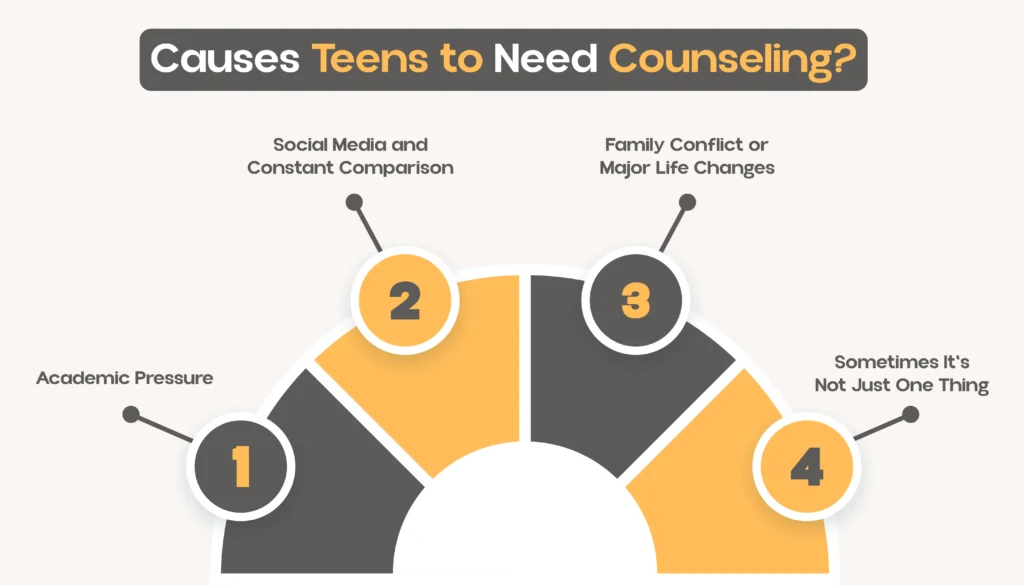
Academic Pressure
Today’s teens face academic pressure that extends far beyond the classroom. It’s no longer just about earning good grades. Many feel they need to excel in every subject, take advanced classes, participate in extracurricular activities, and earn admission to a competitive college or university.
For some, the expectations don’t stop there. They also feel pressure to choose a career that promises long-term stability and success, even if it doesn’t reflect their own interests or strengths. Others compare themselves to high-achieving siblings, cousins, classmates, or family friends, leaving them feeling like they’re constantly trying to keep up.
Over time, these expectations can take a serious toll on a teen’s mental health. What begins as a desire to succeed can gradually turn into chronic stress, anxiety, and a fear of falling short. When academic pressure starts affecting a teen’s sleep, relationships, or overall well-being, it may be a sign that they need additional support.
Social Media and Constant Comparison
Unlike academic pressure, which is often tied to school and future goals, social media creates a different kind of pressure. Even after the school day ends, many teens remain connected through social media, group chats, and online gaming, making it difficult to truly unplug.
While social media helps teens stay connected, it also makes it easy to compare themselves with others. As they scroll through posts highlighting achievements, friendships, special events, and carefully edited photos, some begin to believe everyone else is happier, more successful, or more confident than they are.
Social media can also expose teens to cyberbullying, hurtful comments, exclusion, and the fear of missing out. Because these experiences often continue long after school is over, many teens feel like there’s no real break from peer pressure or social expectations.
Over time, constant comparison and negative online experiences can affect a teen’s confidence, mood, and sense of belonging. Teen Therapy can help them process these challenges, build self-confidence, and develop healthier ways to navigate both their online and offline relationships.
Family Conflict or Major Life Changes
Home is where many teens expect to feel safe and supported. When that sense of stability changes, it can have a lasting impact on their emotional well-being.
Major life events such as divorce, the death of a loved one, moving to a new neighborhood or school, financial hardship, or ongoing conflict at home can leave teens feeling anxious, uncertain, and overwhelmed. Even positive changes, like welcoming a new sibling or becoming part of a blended family, can bring emotional challenges as teens adjust to new routines and relationships.
Parents often do their best to shield their children from these situations, but teenagers usually notice more than adults realize. Instead of talking about what they’re feeling, they may withdraw, become irritable, or seem emotionally distant. When these changes begin affecting their daily lives, counseling can help teens process their emotions and navigate difficult transitions in a healthy way.
Sometimes It’s Not Just One Thing
Parents often look for a single explanation when they notice changes in their teenager’s behavior. In reality, there usually isn’t just one cause. Instead, it’s often several smaller challenges that build over time.
A teen might be juggling academic pressure, comparing themselves to others on social media, navigating changes at home, struggling with friendships, or coping with a difficult life event. Each challenge may seem manageable on its own, but together they can leave a teenager feeling overwhelmed, emotionally drained, and unsure of how to cope.
That’s one of the reasons counseling can be so valuable. Teens don’t have to wait until they’re in crisis to benefit from professional support. At our Youth and Family Therapy Center in Westminster, we support children and teens ages 6–17. We provide a safe, supportive environment where young people can better understand their emotions, develop healthy coping skills, build resilience, and gain the confidence to navigate life’s challenges.
How to Talk to Your Teen About Counseling
Bringing up counseling can feel intimidating, especially if you’re worried your teen will react negatively. The key is to approach the conversation with empathy rather than urgency. Choose a calm moment, share what you’ve noticed without placing blame, and let them know your goal is to support them, not to criticize or “fix” them.
Instead of focusing on what they’re doing wrong, talk about how they’ve been feeling. You might say, “I’ve noticed you’ve seemed more stressed lately, and I want to make sure you have the support you need.” Give your teen space to respond, listen without judgment, and reassure them that counseling isn’t a punishment or a sign that something is wrong with them. It’s simply an opportunity to talk with someone who can help them navigate life’s challenges in a healthy way.
Even if your teen isn’t immediately open to the idea, don’t lose hope. Many teenagers need time to process the conversation before they’re ready to accept help. By keeping the dialogue open and approaching the topic with patience and understanding, you’re showing them that they don’t have to face their struggles alone.
If you’ve recognized several of the signs as discussed above, know that you don’t have to navigate them alone. Seeking support early can make a meaningful difference in your teen’s emotional well being and overall development.
If you’re based in Colorado, consider reaching out to Ignite Counseling Colorado for compassionate counseling services for children and teens ages 6–17. Families in Ohio can explore Mindfully’s teen therapy and psychiatry services, while those in the Austin, Texas area can connect with Therapy Austin for experienced, evidence-based support tailored to adolescents. Taking the first step today can help your child build the skills and confidence they need to navigate life’s challenges.
Final Thoughts
Knowing whether your teenager needs counseling isn’t always easy. While every teen experiences ups and downs, ongoing changes in their emotions, behavior, or daily life shouldn’t be ignored. Trusting your instincts and seeking support early can make a meaningful difference.
Counseling isn’t only for teens in crisis. It provides a safe, supportive space where they can better understand their emotions, develop healthy coping skills, and build the confidence to navigate life’s challenges now and in the future.